PourPlays Journal
The $20 Billion Problem Hiding in Plain Sight: Why Wine’s Discount Problem is Actually Its Biggest Opportunity
Everyone in the wine industry knows the dirty secret: 40% of all wine is purchased using coupons and discounts. Let that sink in for a second. Nearly half of every bottle sold in the US requires a price cut to move off the shelf.
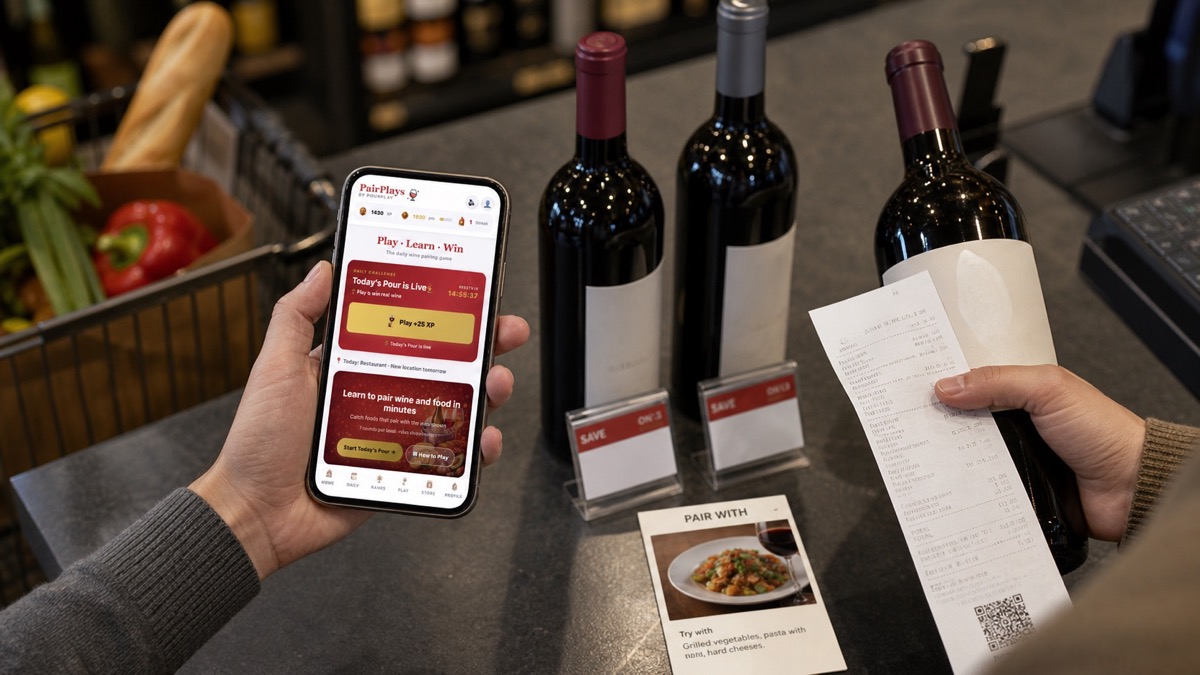
Everyone in the wine industry knows the dirty secret: 40% of all wine is purchased using coupons and discounts.
Let that sink in for a second. Nearly half of every bottle sold in the US requires a price cut to move off the shelf.
For retailers, that’s margin erosion on an industrial scale. For wineries, it’s brand dilution and a race to the bottom. For consumers, it’s decision paralysis and the nagging feeling they’re overpaying unless there’s a sale.
The industry has accepted this as the cost of doing business. We haven’t.
The Real Cost of the Coupon Trap
The numbers tell a brutal story. US wine sales topped $50 billion last year, which means roughly $20 billion of that revenue was discounted. That’s not just money left on the table. That’s value destroyed across the entire chain.
Retailers are stuck in an endless cycle of promotions, training customers to never pay full price. Email inboxes overflow with “20% off this weekend only” offers that have lost all meaning. Loyalty programs reward volume over engagement. And the data collected from all those transactions? It’s sitting unused in databases, offering zero insight into what customers actually want.
Meanwhile, consumers have decision fatigue. Walk into any Total Wine or browse Vivino and you’re confronted with thousands of options. The only clear signal is price and discounts. So people gravitate toward what’s on sale, not what they’ll actually love.
This isn’t a sustainable model. It’s a slow-motion crisis that’s been normalized.
What If Discounts Could Be Smart Instead of Desperate?
Here’s where it gets interesting. The problem isn’t discounts themselves. The problem is that they’re dumb.
They’re blanket offers blasted to entire email lists. They’re shelf talkers that everyone sees regardless of taste or intent. They’re last-minute markdowns on inventory that’s not moving. There’s no intelligence, no personalization, no strategic thinking about who gets what offer and when.
Now imagine a different approach.
Imagine an AI system that knows your taste profile, your purchase history, your price sensitivity, and your discovery patterns. It knows you love Oregon Pinot Noir but have never tried anything from Willamette Valley’s Eola-Amity Hills AVA. It knows you typically spend $25-35 on bottles. It knows you haven’t purchased in six weeks.
So instead of blasting you with a generic “20% off all red wine” email, it serves you a targeted offer: “We found an Eola-Amity Hills Pinot Noir that matches your palate profile. Try it for $5 off this week.”
That’s not a desperate discount. That’s a smart nudge toward discovery.
PourPlays’ Coupon AI: Precision Over Desperation
At PourPlays, we’re building exactly that system. We call it Coupon AI, and it’s designed to transform discounting from a margin-killing necessity into a strategic growth tool.
Here’s how it works:
Behavioral Intelligence: Our platform learns how each user discovers, tastes, and purchases wine. We know if you’re an adventurous explorer or a cautious buyer. We know if you’re price-sensitive or willing to splurge on special occasions. We know when you’re browsing versus buying.
Predictive Targeting: Instead of offering discounts to everyone, we identify the specific moments when a targeted offer will drive conversion. Someone who’s tasted three Malbecs through our platform but hasn’t purchased? They get an offer on a Malbec that matches their profile. Someone who’s loyal but hasn’t bought in eight weeks? They get a reengagement offer on a new release from a producer they love.