
PourPlays Journal
California Is Pulling Up Pinot. Wine Has to Rebuild the Invitation.
California's vineyard crisis is bigger than oversupply. It is a warning that wine must become easier to discover, understand, and choose.
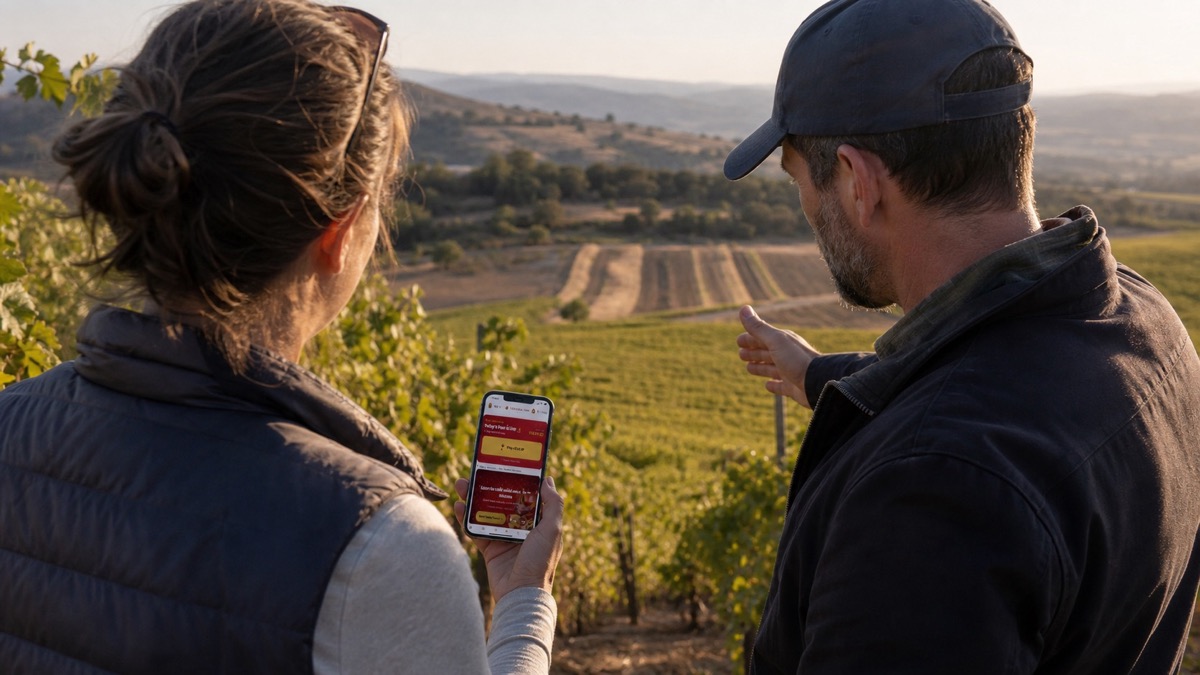
Most stories about a struggling industry arrive as charts. This one arrives as a fire.
In a recent report published by The Seattle Times, a California grower watches workers tear out pinot noir vines and burn the wooden posts that held them up. The family business had lasted 51 years. The math no longer did.
That scene is painful because it makes an abstract downturn physical. This is not a few slow weekends in a tasting room. It is land changing purpose, family businesses closing, and wine being left on the vine because harvesting it can cost more than the grapes are worth.
The numbers are brutal. The message is bigger.
The report says wine sales nationwide have fallen to their lowest level in more than two decades. In California, which makes roughly 80% of U.S. wine, growers pulled out about 38,000 acres of wine grapes in 2025. That is around 7% of the state's planted acreage. Industry estimates also put the amount of fruit left unpicked above 500,000 tons.
Pinot noir tells the boom-and-bust story especially well. After Sideways turned the grape into a cultural event, growers planted more of it and tasting rooms filled up. Now California pinot production is down 30% from 2021, and some growers are replacing vines with white varieties such as fiano and grüner veltliner.
Wine did what industries often do when demand is strong: it built more of what was already working. The harder question is what happens when the customer changes.
Drinkers did not stop being curious
The easy explanation is that younger adults do not want wine. The reporting suggests something more complicated.
Some people are drinking less. Some are choosing nonalcoholic options. Some are feeling the squeeze of a product that can look like a luxury purchase. And when they do buy wine, many are asking for chilled reds, orange wines, crisp whites, and bottles that feel relaxed rather than ceremonial.
That is not the end of curiosity. It is a request for a different invitation.
People still want flavor, stories, food, and moments together. What they do not want is to spend money on a bottle they cannot decode, then feel as if they failed a test when it is not right for them.
Wine has spent years protecting its mystique. The bill for that mystique is coming due.
Discounts cannot create confidence
When shelves are crowded and cash is tight, the instinct is to cut the price. A sale can move a bottle. It cannot teach someone why that bottle belongs at their table, how it differs from the one beside it, or what to try next.
No digital platform can undo the oversupply already in the ground. But the next chapter of demand will not be built by producing more sameness and shouting louder about price. It will be built by helping more people participate.
That means plain language. It means discovery tied to food, mood, occasion, and actual taste. It means giving people a low-pressure way to learn what they like. It also means making room for lighter styles, new regions, and people who want to drink less without leaving wine behind entirely.
This is the work PourPlays is built around. Not telling people what a serious wine drinker should choose. Helping them build enough confidence to choose for themselves.
The vineyard is asking a consumer question
The California crisis looks like a farming and inventory problem because that is where the consequences are most visible. Underneath it is a relationship problem.
If the industry wants a healthier future, it has to make wine feel relevant before the bottle reaches the clearance cart. It has to earn attention between purchases. And it has to turn education from a gate into a game people actually want to play.
The vines being removed today are a warning. Rebuilding demand starts by rebuilding the invitation.
Source: Read “Sales Are So Low, California Wineries Are Burning Their Vineyards” in The Seattle Times.