The PairPlays field guide
How to Play PairPlays: 20 Levels of Wine Discovery
Catch the pairing. Learn from the recap. Climb from your First Sip to the Final Decant—one quick, playable wine lesson at a time.
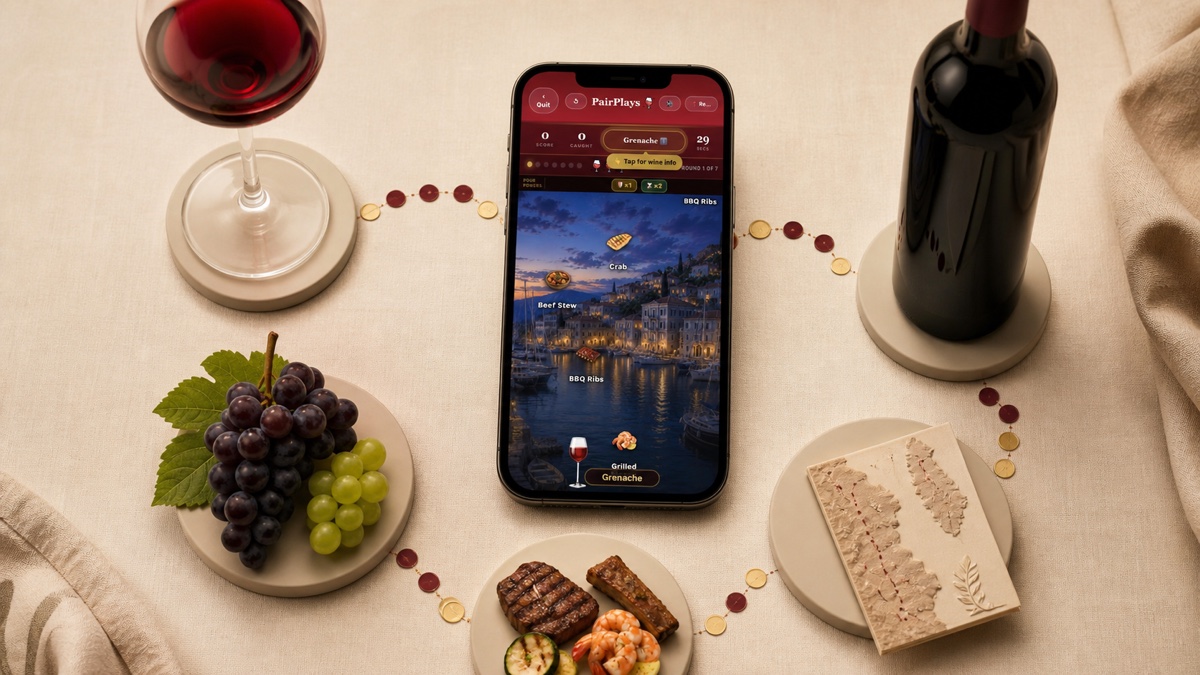
PairPlays is a wine course that moves at game speed. Foods, grapes, regions, and bottles fall through a changing scene; your job is to guide the catcher beneath the choices that belong together. Every good catch builds your score. Every miss becomes a useful explanation. The knowledge arrives while your hands are busy playing.
You are not studying for a wine test. You are building an instinct you can bring to a menu, a shop, or the next bottle on the table.
Watch the 78-second tutorial
The quickest way to understand PairPlays is to see one run in motion. This short tour shows the catcher, the changing round goals, the recap, and the places your progress can take you.
The rules in one pour
Read the prompt
Each round tells you the wine, grape, region, food, or bottle you are playing around.
Move the catcher
Slide across the bottom of the screen and line up with the answers you want.
Catch with intention
Correct pairings add points. A bad catch can cost a life, so sometimes the smartest move is to let an item fall.
Learn from the recap
After the action stops, PairPlays explains the choices that slipped past or caught you out.
Four ways the game asks you to think
The subject changes as you climb, but the challenge language stays familiar. That leaves more of your attention free for the wine lesson.
Focus
Single Target
Only one named answer counts. Learn to spot it cleanly while everything else tests your restraint.
Flow
Catch the Pairings
Gather the good pairings as they fall. This is the clearest expression of the PairPlays rhythm.
Adapt
Mixed
The objective can shift from round to round, including faster moments. Read first, then react.
Restraint
Avoid
One option is the off-note. Let it pass and catch the choices that still belong.
Seven rounds make one level
Every level is a complete tasting flight. The scenery and challenge evolve, but the seven subjects give each session a dependable beginning, middle, and finale.
- Red WineHow tannin, richness, and savory foods find balance.
- White WineWhy freshness and acidity can lift seafood, poultry, spice, and cheese.
- Sparkling WineHow bubbles work with salt, fat, celebration foods, and more than dessert.
- Dessert WineThe sweet rule that keeps the wine from disappearing beside the dish.
- Grape VarietalsThe character of a grape—and the foods that make that character shine.
- RegionsHow local grapes and local dishes grew into natural partners.
- Bonus RoundTurn the table: follow the food on the plate and catch the wines that fit.
The 20-level journey
The difficulty rises without changing the basic promise: each new level asks for a little more speed, discrimination, and recall. The catcher also changes with the lesson—from a wine glass to varietal bottles, plates, regional bottles, and branded bottles.
Levels 1–4
Casual Drinker
Build the foundation with broad wine styles and the foods that naturally suit them.
- First SipAt the Corner Wine Bar, isolate one clear pairing and learn the catcher's rhythm.
- Table PourOn a rooftop at sunset, collect a full set of friendly wine-style matches.
- House SelectionAt a vineyard picnic, adapt as the kind of challenge changes between rounds.
- Spotting the Off-NoteAt the harvest tent, notice the pairing that does not belong—and let it go.
Levels 5–8
Enthusiast
Move from broad styles to grape varietals: the shortcut to understanding structure, flavor, and fit.
- Know Your GrapeEnter the Tasting Room and focus on one varietal's strongest food connection.
- Varietal FlightIn the Old Oak Barrel Hall, compare a wider flight of grape-led pairings.
- Blind TastingInside the Vintner's Workshop, switch between familiar challenges with fewer easy tells.
- Dodge the ImposterOn the twilight terrace, protect the flight from the varietal mismatch.
Levels 9–12
Connoisseur
Put the plate at the center and learn to reason from food toward wine.
- The Perfect MatchIn the Bistro Kitchen, identify the one match that makes a featured dish click.
- Around the TableAt the Chef's Table, work through a broader menu of complementary choices.
- Tasting MenuIn the Michelin Dining Room, carry your pairing logic through changing instructions.
- Clash on the PlateAt a candlelit cellar supper, spot the combination that would fight the dish.
Levels 13–16
Sommelier
Connect grapes, dishes, and places through the regional traditions that shaped them together.
- Old World RootsIn the Old World Cellar, anchor one classic place-to-table relationship.
- Grand TourAt Chateau Grand Cru, travel across a broader map of regional grapes and dishes.
- Terroir TrialOn a hillside estate, keep your regional bearings while the challenge changes.
- Out of RegionIn the Napa reserve room, catch what belongs and reject the geographical outsider.
Levels 17–20
Master
Bring the whole course together with branded-bottle recognition and the confidence to choose among close calls.
- The Collector's CellarIn a private vault, focus on one bottle and the clues that reveal its best match.
- Reserve ListAt the Auction House Salon, read across a wider selection of branded bottles and pairings.
- Master BlendIn the Grand Master Cellar, combine style, grape, food, region, and bottle knowledge on the fly.
- The Final DecantInside the Crown Reserve Library, identify the off-note in the most demanding room of the journey.
Watch the catcher change
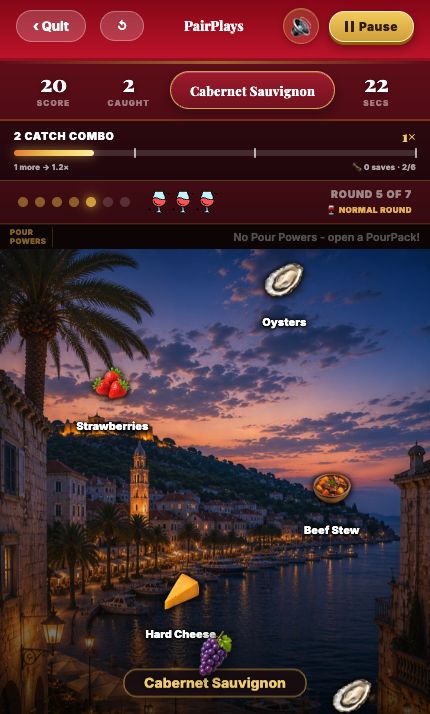
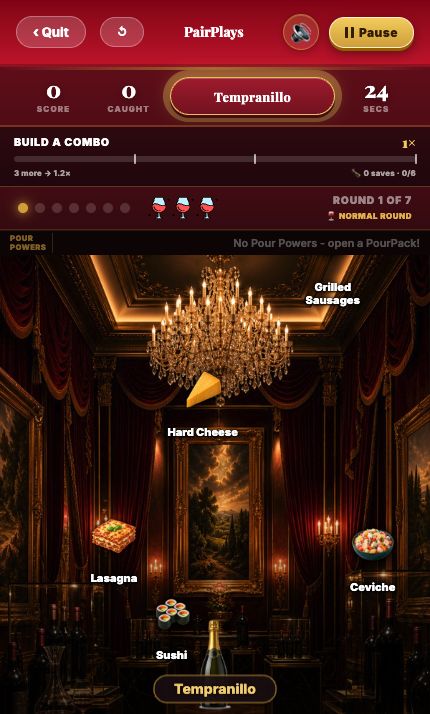
The lesson is built into the object you control. Varietal Flight turns the catcher into the grape itself; Reserve List asks you to recognize a branded bottle while the same pairing logic keeps moving around it.
Help is part of the game
PairPlays gives you a few well-timed ways to change the moment. Slow Time creates breathing room. The Golden Catcher protects you from a wrong catch. Frenzy rewards a confident scoring run, while Time Warp gives the round a little longer to unfold. Lightning can also spark a short burst of momentum during play.
The point is not to skip the lesson. It is to give you another way to stay in it—recover, focus, and make the next decision.
What stays with you after the score
- Pairing logic: acidity refreshes, tannin meets protein, sweetness needs balance, and bubbles are far more versatile than they look.
- Grape confidence: varietal names begin to suggest flavor, structure, and useful menu choices.
- A sense of place: regions stop being map trivia and become connected stories of grapes, dishes, and tradition.
- Better recognition: repeated play helps real bottles feel more familiar when you meet them beyond the game.
- Useful corrections: a missed pairing is not a dead end; the recap tells you why, so the next catch has context.
Successful play also grows the collection around the course: pairing cards, cellar discoveries, PourPoints, experience, streaks, and partner rewards. They mark the journey, but the real prize is simpler—the moment a pairing that once felt mysterious starts to feel obvious.