PourPlays Journal
The World's Best Wine Map Just Got a Lot Bigger
The 2026 Decanter awards delivered record results from the U.S. and surprise regions worldwide. Wine discovery is getting a bigger map.
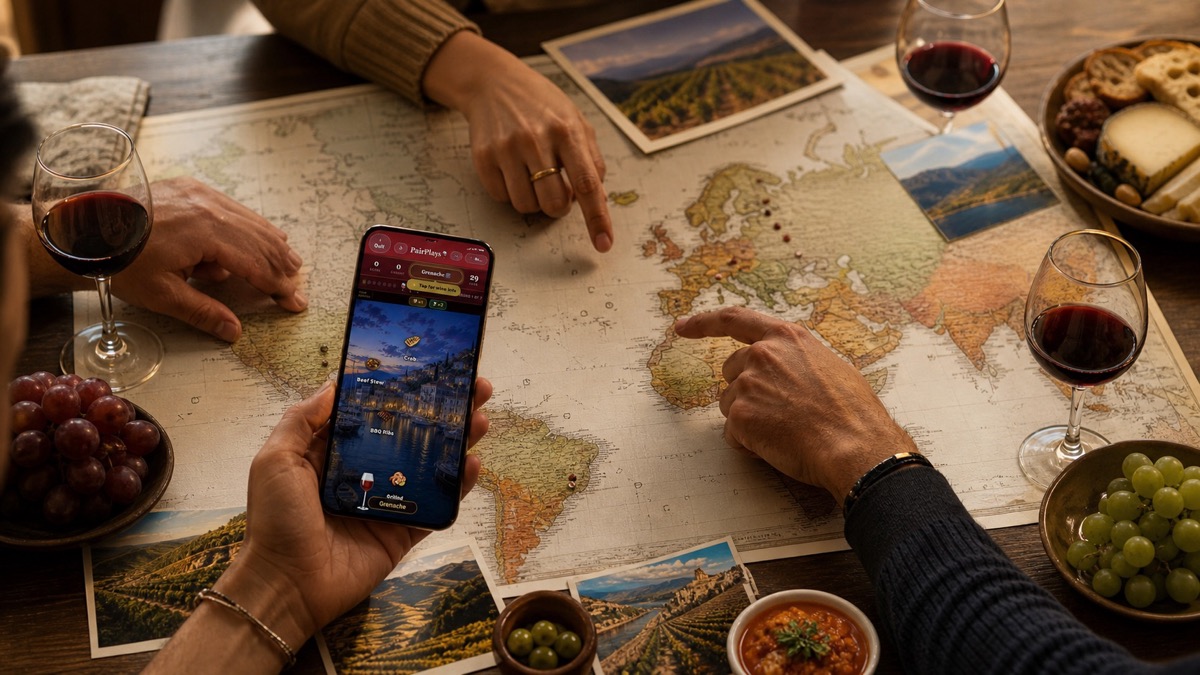
For generations, the wine map handed to new drinkers looked surprisingly small.
France. Italy. Spain. California. Maybe a little Australia, Argentina, and Oregon once everyone felt adventurous.
The 2026 Decanter World Wine Awards just made that map much harder—and much more fun—to defend.
As CNN reports, more than 17,000 wines from 58 countries entered the world's largest wine competition. A panel of 245 judges tasted them over two weeks in London. Established regions still performed brilliantly, but the real story is how many new places earned a reason to be taken seriously.
The United States had its best year ever
American wines won two Best in Show medals, five Platinum medals, and 32 Golds. California, Oregon, and Washington remained strong, but the results did not stop at the familiar borders.
Texas earned its first Gold medals, with four winning wines. Virginia collected five Golds. Pennsylvania took home one.
That matters because most people do not walk into a wine shop expecting Texas tannat or Pennsylvania chambourcin to be part of the conversation. Awards do not settle anyone's personal taste, but they can interrupt an old assumption—and sometimes that is exactly what discovery needs.
The center held. The edges expanded.
France led the competition with 254 top-tier awards and its best result in the event's 23-year history. Italy followed with 144 top-tier medals. Burgundy collected more Best in Show medals than any other region.
So this is not a story about the classic wine world disappearing. It is a story about excellence becoming less geographically predictable.
Spain posted its best top-tier result. Germany nearly doubled its total. Austria had a standout year. British wine won 217 medals, including a Best in Show sparkling wine from Kent, while Essex pinot noir emerged as a style to watch.
Argentina, Brazil, Japan, China, and South Africa all added their own evidence. A first Gold from Hiroshima and a first Gold from Inner Mongolia are not trivia. They are signs that the world's wine vocabulary is still being written.
A medal is an invitation, not an answer
Wine awards can be useful. They give producers recognition, help unfamiliar regions earn trust, and offer drinkers a place to begin.
But a medal cannot know your palate.
The most decorated bottle in the room may still be wrong for your dinner, budget, mood, or taste. And an unawarded local bottle may become the one you remember for years. Scores and medals work best as doors, not commandments.
That distinction matters more as the map expands. A shelf filled with more countries, grapes, and styles is exciting only if people feel equipped to explore it. Without context, more choice can become more intimidation.
Wine discovery needs to grow at the same speed as wine possibility.
Curiosity should travel farther than reputation
Imagine recommending a bottle without starting with prestige.
Start with the person instead. Do they want bright or rich? Familiar or surprising? A quiet dinner bottle or something to bring to a party? Are they excited by a peppery red from Texas, an English sparkling wine, or a grape they have never pronounced before?
Once those questions lead, the expanded wine map stops feeling like homework. It becomes a game with almost no final level.
That is the PourPlays view of this record-breaking year. The best news is not that one country beat another. It is that great wine is appearing in more places, giving more drinkers more ways to find a bottle that feels like theirs.
The old map told people where great wine was allowed to come from.
The new map asks where they want to explore next.
Source: Read CNN's report on the 2026 Decanter World Wine Awards.