PourPlays Journal
Wine Belongs at the Table, Not on a Pedestal
Karen MacNeil and Eric Asimov make the case for affordable, everyday wine as a companion to food, conversation, and connection.
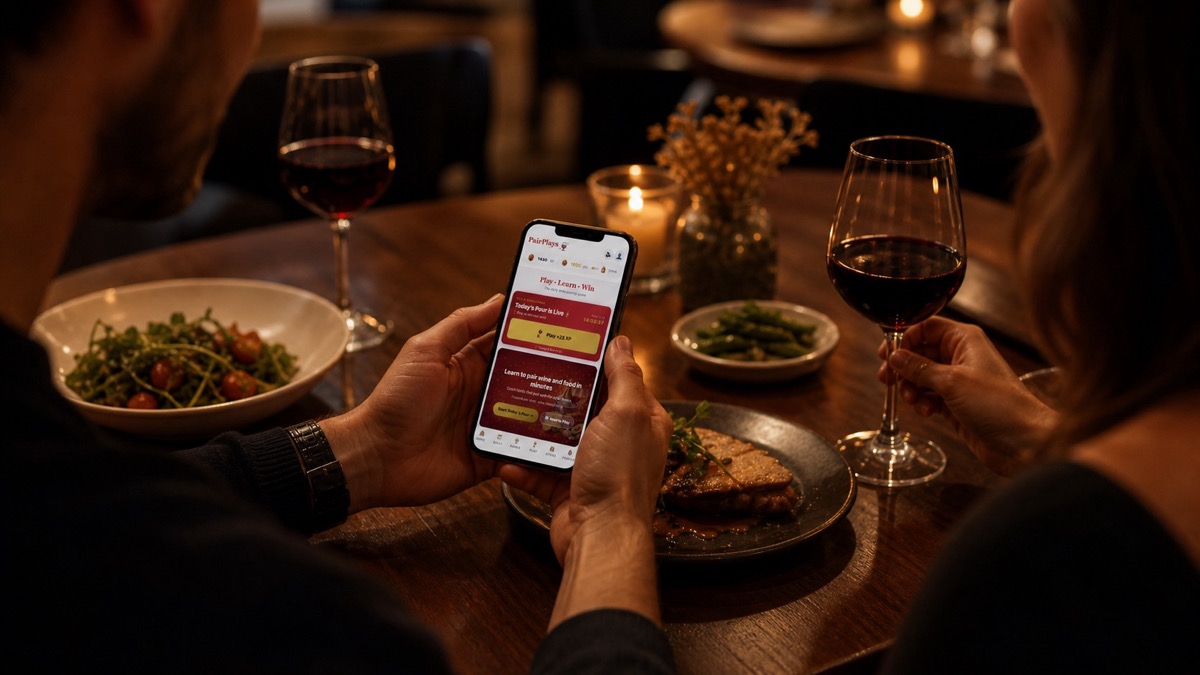
Wine has spent decades trying to become the most important thing on the table.
That may be one reason it is disappearing from the table.
In a conversation between wine author Karen MacNeil and The New York Times wine critic Eric Asimov, the two return to a deceptively simple question: have we forgotten what wine is for?
Not as a collectible. Not as a score. Not as a performance of taste.
As something to drink with food and other people.
The interest is still there
Asimov points to an important contradiction. Wine consumption is falling, and he sees fewer bottles on restaurant tables. Yet good wine bars—especially those filled with younger drinkers—are busy.
That suggests people have not lost interest in wine itself. The connection between wine and the meal has weakened.
At restaurants, cocktails and beer often feel easier. Wine can arrive with a longer list, a higher price, and the quiet pressure to make the “right” choice. When the table wants to relax, wine too often asks everyone to concentrate.
The category has confused importance with difficulty.
Pairing became a test
Wine and food should be one of the most natural pleasures available. Instead, pairing is often presented like a precise science where one wrong move will ruin dinner.
That fear has consequences. People who do not know the rules avoid the category. At the same time, many restaurants have reduced or eliminated dedicated wine professionals, leaving fewer people who can turn uncertainty into curiosity without making the guest feel uninformed.
Technology can help with a recommendation. It can translate a list, remember preferences, and suggest a bottle for a dish. But the goal should not be to substitute one intimidating authority for another. The best recommendation feels like an invitation, not an instruction.
This is where play matters. A pairing game can make comparison feel low-stakes. It lets people try an idea, notice what changes, and build confidence through experience instead of memorization.
Restaurant pricing is breaking the ritual
The conversation does not let restaurant economics off the hook.
Food costs more. Wine costs more. Restaurants are under real pressure. But when a bottle is marked up four or five times over wholesale, wine stops feeling like part of dinner and starts feeling like a special tax on it.
For many guests, a cocktail is a contained decision. A bottle of wine can be a three-figure commitment before the food arrives. Choosing water with the meal is not necessarily a rejection of wine. Sometimes it is simply the rational response to the list.
If restaurants want to build the next generation of wine drinkers, they need more than trophy bottles. They need good, fairly priced wines that can support a Tuesday dinner without turning it into an occasion the guest has to finance.
Wine is agriculture before it is prestige
MacNeil and Asimov also surface one of wine's biggest missed opportunities.
Modern diners care deeply about farms, ingredients, seasons, and the people who produce their food. Wine belongs naturally in that conversation. It is an agricultural product shaped by a place, a growing season, farming choices, and human hands.
Yet conventional wine culture often removes all of that context. Scores, tasting notes, and status can reduce a farmed product to liquid in a glass. The bottle rises onto a pedestal while the vineyard disappears.
The appeal of natural wine offers a clue. Its culture frequently foregrounds farming, process, personality, and place. It gives drinkers a story that connects the bottle to the way they already think about food.
Wine does not need less depth. It needs depth that feels human.
Everyday wine deserves more respect
The industry's obsession with greatness has also distorted what counts as a good bottle.
Most wine is not meant to be the centerpiece. It is a supporting player: fresh enough for the food, interesting enough for conversation, and easygoing enough that nobody has to stop the evening to admire it.
That is not lesser wine. It may be the right wine.
An affordable bottle shared often can build a stronger relationship than an exalted bottle most people will never taste. Everyday wines are where preferences form, memories accumulate, and confidence becomes natural.
The future of wine may depend less on convincing people to chase greatness and more on helping them recognize goodness.
Put the pleasure back in the middle
At PourPlays, we believe wine becomes more meaningful when it becomes less performative.
Food pairing should create curiosity, not anxiety. Technology should help people notice their own taste, not dictate it. And wine should add to the table—more flavor, more conversation, more connection—without demanding to be the star.
Wine's place is not above the meal.
It is inside the moment.
Source: Watch Karen MacNeil and Eric Asimov discuss wine's place at the table on YouTube.